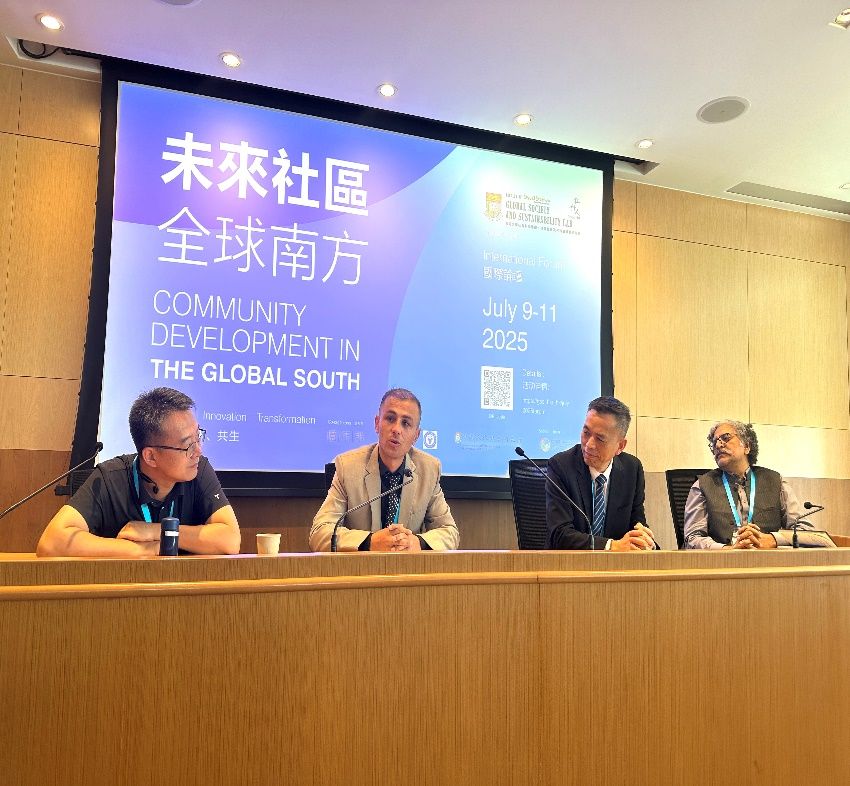
A three-day workshop titled “Community Development in the Global South” was held from July 9 to 11, 2025, at the University of Hong Kong. Organized by the Global Society and Sustainability Lab Hong Kong University. This workshop gathered experts, researchers, entrepreneurs and practitioners to discuss how development initiatives can become more all-encompassing and responsive to the people they aim to serve.
One of the important highlights was a round table discussion by Deedar Karim, who addressed the growing involvement of Chinese enterprises, humanitarian organizations, and NGOs in the Pakistan. Mr. Karim addressed the topic: “As Chinese state-owned enterprises, businesses, humanitarian organizations and NGOs become increasingly involved in countries of the Global South, they face the challenge of learning to engage with local communities. Cultural and social differences add to the complexity of these challenges.”
Mr. Karim shed light on the varied experiences of Chinese enterprises working in Pakistan. He noted that Chinese citizens working in Pakistan often remain isolated in what he called “working capsules,” instead of interacting with local people. This “isolation,” Karim highlighted, “is shaped by differences in religion, language barriers, and security concerns. All of these factors limit meaningful exchanges between Chinese workers and local communities.”

Another major challenge, according to Karim, is the lack of local input in development projects. Many Chinese enterprises rely heavily on the data and information provided by the Pakistani government, while neglecting the perspectives of the communities directly affected by these projects. This approach, he warned, risks distancing local populations and strengthening the perception that development is imposed from the top down by political and business elites, opposite to their long term greater well being.
To address this problem, Mr. Karim mentioned the “WeValue Crystallisation Framework.” This is a participatory framework structured to bring community voices, shared values and tacit knowledge into the planning and implementation of development projects. “If Chinese companies apply this framework,” he said, “they will not only improve the relevance and sustainability of their projects, but also win the trust, hearts, and minds of the communities where they operate in Pakistan.”
Mr. Karim stressed that such kind of approaches offer a meaningful alternative to elite-driven models of development. By listening directly to local people, enterprises can build stronger relationships, reduce misunderstandings, and increase the long-term success of their investments in Pakistan.